 Readers' Pick
Two Hours, One Day, Six Months: The Three Clocks Behind One Soft Chew
SuperBeets Memory + Focus is a soft chew sold by GNC, thirty to a pouch. Each of its three ingredients rests on one study, and each of those studies ran on a very different clock.

This is a paid advertisement. Sponsored by GNC Holdings, LLC (seller); Human Power of N (HumanN), maker.

Chester Vaughn is the name the Riverbend Reader health desk writes under.
The facts about the chew on this page come from the seller's own listing, its photographs of the panel, and its published shipping and return terms.
The five customers quoted further down are real, and their words are public on the seller's page, which notes that each review was first posted on the maker's own site.
They carry no purchase mark, and this page does not add one.
The small portraits beside those reviews are illustrations, not the people who wrote them.
This page is about time, because a chew you take once a day is really a small daily clock.
SuperBeets Memory + Focus is a blueberry-pomegranate soft chew made for HumanN of Austin, Texas and sold by GNC of Pittsburgh.
Each of its three ingredients has one study behind it, and each study ran for a very different length of time.
I lined those clocks up against the pouch, the return window and the sugar, and did the arithmetic that never makes it onto a bag.
Most mornings I walk the same stretch of river, down to the place where it bends and the water slows.
There is a bench there with a view of the far bank.
Men my age sit on it with a thermos, and most of them are keeping some kind of time.
One counts his steps on a watch.
One comes at exactly the same hour every day and leaves when the church bell across the water strikes.
I started thinking about clocks on that bench, because of a small dark-red square I had been reading about all week.
The river has its own clock, of course.
It rises in the spring, drops through August and carries leaves past the bench every October.
Nobody on that bench would judge the river by a single morning.
You would have to watch it for a season to say anything true about it, and the same turns out to be true of a daily chew.
It is a soft chew, about the size of a caramel.
You take it out of a resealable pouch, you chew it, and you swallow it with nothing.
No glass of water, no measuring spoon, no counting anything out over the sink.
That is the appeal of the format, and it is a real one.
A chew is the easiest daily habit anyone has ever sold you, and that is exactly why its clock matters.
A habit this easy tends to go on for a long time without anyone checking what it is doing.
So before anything else, I wanted to know how long each piece of the evidence behind it actually lasted.
Not whether the studies were good or bad in the abstract.
Just how long each one watched the people in it, and what it was watching.
The answer turned out to be the most useful fact about this chew.
It explains what you can reasonably expect from one pouch, and what you cannot.
The three studies behind this chew ran for two hours, one day and twenty-six weeks.
Hold on to those three numbers, because the rest of this page is built on them.
The pouch runs thirty days, the return window runs thirty days, and the only study that measured memory ran almost six times longer than either.
A Pouch Is a Thirty-Day Clock
Start with the object, because the object sets the first clock.
The pouch holds thirty soft chews.
The label's direction is one sentence: "As a dietary supplement, take one (1) chew daily. Intended for adult consumption only."
One a day, thirty in the pouch.
That makes the pouch itself a calendar, and a very honest one.
On the first morning it is full.
On the fifteenth it is half gone, and on the thirtieth you are folding an empty pouch into the recycling.
Nobody has to remember whether they took it, because the pouch remembers for them.
A glance at how much is left tells you how many mornings have gone by.
I like that about it.
Most daily products hide their clock inside a bottle of ninety or a tub of sixty servings you never quite finish.
This one is small enough that the clock is visible.
Thirty chews is one month, and one month is one pouch.
The format also decides where the chew lives.
It does not need a kitchen, a glass or a counter.
It can ride in a jacket pocket to the river, in a glove box, or in a desk drawer at work.
One customer quoted further down liked exactly that: something she could eat on her way out the door.
That portability is part of why the habit is so easy to keep.
It is also why it is worth a moment of thought before it becomes automatic.
An easy habit deserves a hard look at the start, not six months in.
So here is what the pouch holds, and then here is how long each piece of evidence behind it ran.
Three Lines on the Panel, and What Surrounds Them
The Supplement Facts panel on the back prints three named ingredients and nothing more.
- Beet root powder, 300 milligrams.
- Verti-te™ resveratrol, a grape-derived form, 150 milligrams.
- Coffee (Coffea arabica) fruit extract, 100 milligrams.
That is 550 milligrams of named ingredients in each chew.
Every weight is printed, and nothing is tucked inside an unnamed blend.
That is worth saying plainly, because plenty of panels in this aisle do not do it.
You can hold each line of this one up against its study and compare the amounts directly.
Under the three lines sit the food facts, because a chew is also a small piece of food.
Each one carries 20 calories, 4 grams of carbohydrate and 2 grams of added sugar.
Then come the other ingredients, the ones that turn 550 milligrams of powder into something soft and sweet.
Tapioca syrup, raw cane sugar, rice bran, flavorings, sunflower lecithin, sunflower oil, malic acid, glycerin, citric acid and a stevia extract.
The syrup and the cane sugar are the sweetness and the chew.
The acids are the tartness, and the lecithin and oil keep it from sticking to your teeth.
The flavor printed on the front is blueberry and pomegranate.
Neither fruit is one of the three counted lines on the back, so read those two words as a taste, not an ingredient.
The seller's own highlights say the chew has no gluten, no lactose and no dairy, and that it suits vegans and vegetarians.
Those are the seller's statements, and I pass them on as the seller's statements.
In the seller's photographs, the front of the pouch also prints the word Decaffeinated.
The panel gives no caffeine figure at all, which matters for the first clock, and I will come back to it.
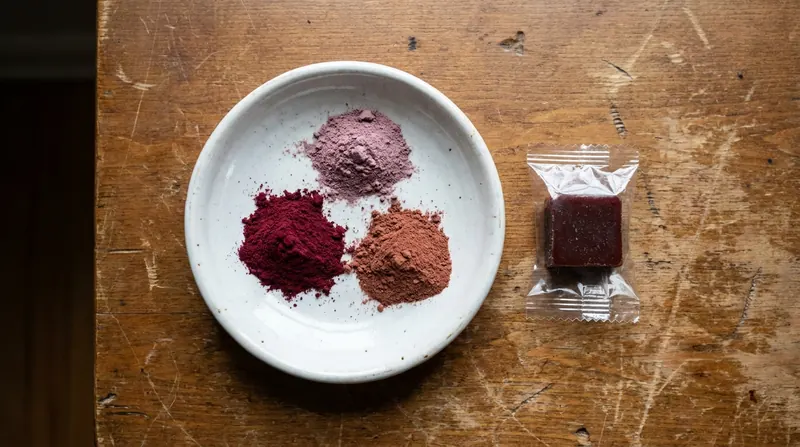
The Three Clocks, Side by Side
Before going line by line, here is the whole picture in one place.
- Coffee fruit, 100 mg: one dose, then two hours of watching a protein in the blood of ten people per group. [1]
- Beet, 300 mg of powder: one day of nitrate-rich eating that included beet juice, then a brain scan of blood flow in older adults. [2]
- Resveratrol, 150 mg: the study used 200 mg a day for twenty-six weeks in 46 overweight adults aged 50 to 75, and tested words. [3]
Only the longest clock measured memory, and it used more resveratrol than the chew holds.
Read those three lines once more, slowly.
The shortest study measured blood, the middle one measured a scan, and only the longest one asked anybody to remember anything.
That pattern is the most important thing on this page.
The longer a study runs, the closer it gets to the question you actually care about.
A two-hour study can tell you whether something moves in the body.
It cannot tell you what a month of mornings will feel like.
Short clocks answer small questions, and only long clocks answer the question on the front of the pouch.
None of this makes the short studies worthless.
It makes them early, and the honest thing is to call them early.
Why the Short Clocks Always Come First
It would be easy to read the last box and decide the short studies are some kind of sleight of hand.
They are not, and it helps to know why research usually runs in this order.
When scientists first look at a food or a plant compound, they start with the cheapest question.
Give a dose, take blood, and see whether anything moves at all.
That kind of study is small because it has to be.
It costs little, it takes an afternoon, and it tells the researchers whether a longer study is worth paying for.
If something moves, the next step is days or weeks, often with a scan.
Only after that does anyone pay for months, a placebo group and a memory test.
So a short clock is not a weak study pretending to be a strong one.
It is the first rung of a ladder, and the honest question is how far up the ladder each line has climbed.
On this panel, the coffee fruit is on the first rung.
The beet is on the second, and the resveratrol has reached the top rung once, in one group of people, at a higher dose.
The rung matters more than the headline, because the rung tells you how much is still unknown.
None of that is a criticism of the company that made the chew.
It is simply where the science on these three ingredients stands today, and a buyer is entitled to know it.
Clock One: Two Hours After One Dose
Begin with the coffee fruit, because its clock is the shortest and its match to the chew is the closest.
Coffee grows inside a small red fruit, often called a coffee cherry.
The bean you grind is the seed, and the red flesh around it is usually discarded when the beans are processed.
This chew uses an extract of that fruit, 100 milligrams of it.
In some places the dried husks are steeped and drunk like a tea.
The study behind it gave healthy adults a single dose and then took blood samples over the following two hours. [1]
There were ten people in each group.
What the researchers measured was a protein called brain-derived neurotrophic factor, measured in the blood.
After 100 milligrams of whole coffee fruit concentrate, its level in plasma rose by about 143 percent from where it started. [1]
Two comparison substances, a green coffee caffeine and a grape seed extract, raised it by about 31 percent. [1]
The authors themselves wrote that larger studies were needed.
The dose in that study was 100 milligrams, and the panel prints 100 milligrams.
Of the three lines on this chew, it is the only one whose amount matches its study exactly.
The panel does not say whether its extract is the same preparation the researchers used.
So the match is in the number, and I cannot promise more than the number.
Now the clock.
The study watched for two hours, once, and then it was over.
It measured a protein in blood, not a memory, a word list or a conversation.
Nobody in it took the fruit for a week, let alone a month.
Two hours of a blood marker in ten people is a starting point, not a result you can feel.

What a Two-Hour Clock Cannot Tell You
A two-hour study answers one question well: does anything change in the blood after this dose.
The answer here was yes, in a small group, on one occasion.
It leaves every other question open.
Does the change last into the afternoon, does it repeat on day two, and does it add up over thirty days.
It also leaves open the question that matters most to anyone reading a pouch called Memory + Focus.
Does a change in that protein in the blood show up as anything a person would notice.
The study did not ask.
It was not designed to, and it would be unfair to blame it for that.
But it would be just as unfair to you to let the two-hour clock stand in for a thirty-day one.
A single morning measured in a lab is not a month of mornings at your kitchen table.
There is one more thing the first clock touches, and that is caffeine.
Coffee fruit carries some caffeine of its own, in an amount that varies from fruit to fruit.
The front of this pouch prints Decaffeinated, and the panel gives no milligram figure.
That is the maker's statement about its extract, and it is the only statement anyone can give you from the package.
The Food and Drug Administration cites 400 milligrams of caffeine a day, roughly two to three 12-ounce cups of brewed coffee, as an amount not generally associated with negative effects in most healthy adults. [4]
Europe's food safety panel reached a similar place for single doses up to 200 milligrams. [5]
So keep your coffee where it was.
If you change your coffee and start a chew in the same week, you will never know which one you are noticing.
One change at a time is the only way a person can read his own clock.
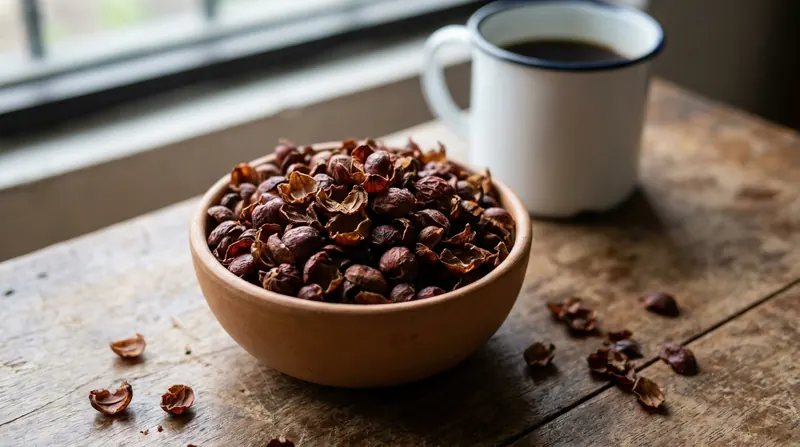
Laying Two Hours Over a Morning Walk
I did one small exercise with the first clock, just to make it concrete.
I laid the two hours of that study over a normal morning of mine.

If I took the chew at the bench, the two hours would cover the rest of my time there.
They would cover the walk back up the hill, the second cup of coffee at home and the first hour of work.
That is all the overlay means.
It shows where the study's clock would sit in a real day, not what would happen inside it.
The study did not follow anyone through a walk, a conversation or a morning of work.
It followed a protein in a blood sample, in a clinic, and then it stopped.
I find that picture useful because it keeps the number in proportion.
Two hours is the length of a morning errand, and a single morning is not a month.
When you see a figure like 143 percent, it is tempting to picture it spread across every day of the pouch.
The study gives no reason to picture that, and no reason to rule it out either.
Two hours is a morning, and the pouch is thirty of them.
Clock Two: A Single Day of Beets
The second clock is one day long, and it belongs to the beet.
Beet root is sold as a powder mostly for its dietary nitrate.
The body turns nitrate into nitrite and then into nitric oxide, a substance that widens blood vessels.
That is why beet juice turned into a sports drink over the last fifteen years.
It is also why a beet company would put beet powder into a chew with the word Focus on it.
The study behind this line took older adults, averaging about 75, and fed them for a single day. [2]
On one day they ate a diet high in nitrate that included beet juice, and on another they ate a diet low in it.
Then the researchers measured blood flow in the brain on an MRI scan.
Overall blood flow to the brain did not change. [2]
What did change was the flow in one region, the frontal white matter, which was higher after the high-nitrate day. [2]
It is a real finding, in a small study, and it is a finding about a scan.
Nobody in that study was asked to remember anything.
The clock ran one day, the test was a picture of blood flow, and that is where it stopped.
One co-author held a patent related to nitrite.
That does not make the result wrong, and I mention it because a careful reader would want to know.
One day of beets on a scan is a reason to keep reading, not a reason to buy.

Three Hundred Milligrams and a Glass of Juice
The day in that study was not a day of beet powder.
It was a whole day of eating chosen for its nitrate, beet juice included.
A single glass of beet juice carries many times more nitrate than 300 milligrams of powder.
So the chew is not a small version of that day; it is a sliver of it.
I am not saying 300 milligrams is useless.
I am saying nobody has put that amount on that clock and measured it.
If the beet is what interests you, there is a cheaper way to learn how your body takes it.
Eat beets for a week, roasted or grated into a salad, and see how they sit with you.
One thing the beet will tell you on its own, usually within a day or so.
It can turn urine pink or red, harmlessly, and it startles people who were not expecting it.
If that happens after a chew, it is the beet, and it is nothing to worry about.
I would rather you read it here than find out on the second morning.
There is one person who should think twice before a daily beet line, and I will name him later in the page.
It is anyone who already takes something every day for the heart and circulation.
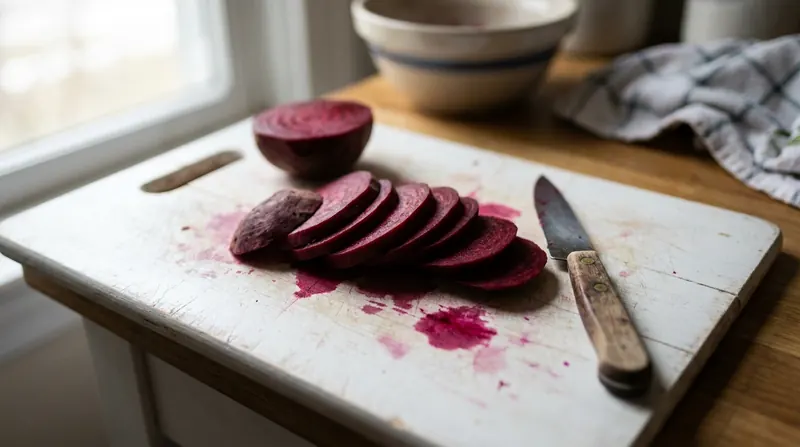
Clock Three: Twenty-Six Weeks
The third clock is the long one, and it is the only one that reached memory.
Resveratrol is a polyphenol that grapes make, concentrated in their skins, and found in smaller amounts in berries and peanuts.
This chew uses a trademarked form called Verti-te™, derived from grapes, at 150 milligrams.
The study behind it followed 46 healthy adults aged 50 to 75 for twenty-six weeks. [3]
Every one of them was overweight, which matters, and I will come back to it.
Half took 200 milligrams of resveratrol a day, and half took a placebo.
At the end, the resveratrol group held on to more words from a list after a thirty-minute delay. [3]
They also showed higher connectivity in the hippocampus on a scan, the region most involved in forming new memories. [3]
That is a memory result, measured over half a year, in people roughly my age.
It is also one study of 46 people.
Forty-six is not a crowd, and one word-list result is one result.
And there are two differences between that study and this chew.
The study used 200 milligrams a day, and the chew holds 150.
The study's volunteers were all overweight, and it is not known whether the result carries over to men who are not.
Nothing on the panel or the listing says the chew's branded form is the one the study used.
The one memory result behind this chew came from a longer clock, a bigger dose and a specific group of people.
None of that makes the chew dishonest.
The panel does not claim the study, and it prints its own amount in plain view.
But it does mean the evidence that sounds most like the name on the front sits furthest from what is in the pouch.
That is the single most useful sentence I can give you about this product.

Six Pouches to Match One Study
Here is the arithmetic that none of the three studies does for you.
Twenty-six weeks is 182 days.
At one chew a day, that is six full pouches and two more chews.
So the shortest honest test of the only memory result behind this chew is not one pouch.
It is six pouches, taken every day, for half a year.
Now the amount.
At 150 milligrams a day for 182 days, the chew delivers 27,300 milligrams of resveratrol, about 27 grams.
The study's volunteers took 200 milligrams a day for the same 182 days, which is 36,400 milligrams, about 36 grams.
Over the full clock, the chew adds up to three quarters of what they took.
That gap of about nine grams is simply the difference between 150 and 200, repeated every morning for half a year.
It is not a flaw in the chew, and the panel prints it in plain view.
Someone will do the arithmetic the other way and reach for a second chew.
The label says one, and I would not second-guess the label on the strength of one study of 46 people.
One pouch is a month; the only memory study behind it was six months.
None of this means a month tells you nothing.
It means a month tells you about the habit, the taste and how your body takes the beet, and very little about the name on the front.
That is still worth knowing.
Just know which question a month can answer before you judge it on the one it cannot.
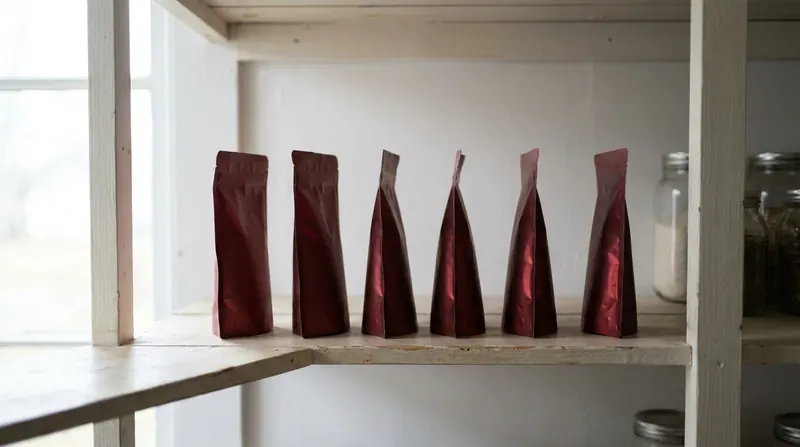
Who Was Inside Each Clock
A clock only tells you something if you know whose time it was measuring.
So here are the people in each of the three studies, as plainly as the papers allow.
The coffee fruit study used healthy adults, ten to a group. [1]
It was a small group of people with no particular reason to be tested, given a single dose and watched for two hours.
The beet study used older adults, on average about 75 years old. [2]
That is closer to the reader this page is written for, and it was a small study that watched one day of eating.
The resveratrol study used 46 healthy adults aged 50 to 75, and every one of them was overweight. [3]
That is the right age range for most men reading this, and a narrower group in one important way.
If you are a lean man of 70, the only memory study behind this chew did not include anyone quite like you.
If you carry some extra weight and you are in your fifties or sixties, it included people much more like you.
Neither of those facts tells you how the chew would go for you.
They tell you how far you are standing from the people who were actually measured.
The closer you are to the people in a study, the more its clock can say about yours.
Four Questions for Any Line on Any Panel
Everything on this page comes down to four questions, and they work on any supplement you pick up.
- How much: does the amount on the panel match the amount in the study?
- How long: did the study run for two hours, a day, or months?
- Measuring what: blood, a scan, or something a person actually did, like remembering words?
- In whom: people like you in age and build, or a different group?
Run the three lines of this chew through them and the result is plain.
The coffee fruit matches on amount and fails on time and measure.
The beet fails on amount, since a day of juice is far more than 300 milligrams of powder, and it measured a scan.
The resveratrol passes on measure and on time, and falls short on amount and, for some readers, on who was in it.
No line passes all four.
That does not make the chew a bad product; it makes it an early one, and now you can say exactly how early.
The questions take about a minute per line.
I would run them on anything else in your cupboard, too, because most panels do much worse than this one.

The Sugar on the Same Calendar
Every clock on this page also counts sugar, so here is that column added up.
Each chew has 2 grams of added sugar and 20 calories.
Over one pouch, that is 60 grams of added sugar and 600 calories.
Sixty grams is about fifteen level teaspoons, spread across thirty mornings.
One chew a day is roughly half a level teaspoon of sugar.
Over the full twenty-six weeks, it comes to 364 grams, a little over three quarters of a pound.
I print that number because the seller prints the per-chew figure, and it deserves to be multiplied.
For most men, half a teaspoon a day is a small thing.
If you count your sugar for a reason of your own, it belongs in the count.
The chew also carries a stevia extract, so not all of its sweetness is sugar.
The two grams are the part that counts, and they are part of what makes the texture soft.
Half a teaspoon a morning is fine to accept, as long as you have looked at it once.
The Clocks This Pouch Does Not Run
Once you start thinking in clocks, you notice how many longer ones there are, and how few of them fit in a pouch.
Take grapes again.
A different preparation, a standardized whole-grape extract at 250 milligrams a day, was tested in 111 healthy older adults over twelve weeks. [6]
The grape group scored higher than placebo on a short mental-status test and on a longer battery of attention, language and memory tasks. [6]
In a second trial of 96 healthy older adults over 84 days, the same extract did well again, with one change on an attention test within 90 minutes of the first dose. [7]
Both trials had authors connected to the extract's maker.
And neither tested this chew's resveratrol, which is a single compound, not a whole-grape extract.
I mention them only because they show what a longer grape clock looks like.
They belong to a different product, and borrowing them here would be dishonest.
Then there is the blueberry on the front of the pouch.
A blueberry concentrate delivering 387 milligrams of anthocyanidins a day was tested for twelve weeks in 26 healthy adults averaging 68. [8]
It went with more blood reaching the brain on a scan and a borderline gain on a working-memory task. [8]
In this chew, blueberry is a flavor, not a counted line, so that twelve-week clock does not belong to it either.

The longest clocks of all are not about any ingredient.
They are about the way people live, and they run for years.
In a three-year trial of 604 older adults, one group ate the MIND pattern of leafy greens, berries, beans, nuts, whole grains, olive oil and fish. [9]
The other group simply ate a little less, and both groups improved their thinking scores by about the same amount. [9]
In 10,775 Brazilian adults followed for a median of eight years, those who ate more ultraprocessed food slipped faster on tests of thinking. [10]
It was an observational study, so it shows two things traveling together, not one causing the other.
In 550 British adults followed for thirty years, heavier drinking went with shrinkage of the hippocampus and faster slippage on a word-fluency test. [11]
Light drinkers had no advantage over people who did not drink at all.
And the cheapest clock of all is water.
In 1,111 adults aged 60 to 89, the third who were measurably short of fluid slipped faster on a processing-speed test. [12]
A review of 18 studies covering 33,707 adults over 60 found the same direction, with the authors calling the link to thinking sparse. [13]
Sparse is not nothing, and a glass of water costs nothing.
Three years, eight years, thirty years: the longest clocks belong to habits, and no pouch can run them for you.
I am not listing those studies to talk you out of the chew.
I am listing them so the chew sits in the right place: a small daily thing beside the big slow ones.

The Return Window Starts at the Order
There is one more clock printed by the seller, and it is the one most men misread.
GNC's written terms let you return an item within 30 days from the order date for a full refund of the purchase price, minus shipping or other charges.
It can come back used or unused, in good condition and in its original box where possible.
That used-or-unused part is better than many return policies in this aisle.
You can actually open the pouch, eat the chews and still send it back.
But look at where the clock starts.
It starts on the day you order, not the day the pouch arrives.
Standard shipping, according to the seller, takes two to five business days.
So some of the window is spent before the first chew ever reaches you.
If the pouch arrives in two business days, you get about 29 chews inside the window.
If it takes five business days and a weekend, you get about 24.
Either way, you are judging slightly less than one full pouch.
And a return has to be started inside those thirty days, not after them.
Store pickup is also offered, which can shorten the wait if there is a GNC nearby.
Shipping is a flat standard charge, and there is no charge above the seller's order line, which one pouch does not reach.
Thirty days from the order means about three and a half to four weeks of chews, and that is the honest length of the trial.
Write the order date on the pouch the day it arrives.
It takes two seconds and saves a lot of guessing on day twenty-seven.
Two Companies Behind One Pouch
The pouch carries two company names, and they do different jobs.
HumanN, whose legal name is Human Power of N, is the maker, at 1250 S. Capital of Texas Highway in Austin, Texas.
It is the company behind the SuperBeets name and the three-line formula.
GNC Holdings, LLC is the seller that this page sends you to.
Its customer service address is 75 Hopper Place, Suite 501, Pittsburgh, Pennsylvania, and it publishes a telephone line, 1-877-462-4700.
When you order through this page, you are buying from GNC.
The return window, the shipping charge and the order date that starts the clock are all GNC's.
Both companies publish a street address.
That is a small thing, and in this category it is not a thing to take for granted.
The chew is also sold in HumanN's own shop, on large marketplaces and in pharmacies.
This page covers the GNC listing, and nothing it says about returns applies to the other shops.
What the Panel Leaves Unanswered
Reading a panel this closely leaves a few questions that only the maker could answer.
I list them because they are fair to ask, and because a buyer can ask them too.
First, is the coffee fruit extract in the chew the same preparation that was used in the two-hour study?
The amount matches, and the panel does not say whether the preparation does.
Second, how much caffeine does one chew carry, in milligrams?
The front of the pouch says Decaffeinated, and a number would settle the question for anyone who counts his coffee.
Third, how does the branded resveratrol in the chew compare with the form used in the twenty-six-week study?
The panel names a trademark, and the study does not name that trademark.
And fourth, why 150 milligrams rather than the 200 of the only memory study behind it?
There may be a good reason, such as taste, the size of the chew or the sugar it takes to carry more powder.
None of these questions is an accusation.
They are the questions any careful buyer would ask, and the seller's customer line is printed above for anyone who wants to ask them.
The Time Words in the Reviews
The seller's page showed 355 ratings when the listing was read, with an average of 4.0 stars.
That count includes 53 percent at five stars, 14 percent at four, 21 at three, 5 at two and 8 percent at one.
Eight percent of 355 is about twenty-eight people who gave it the lowest mark available.
Add the threes and twos, and roughly a third of all ratings sit at three stars or below.
The seller's review system notes that each review was first posted on the maker's own site and then fed through to the seller's page.
So none of them carries a purchase mark from the seller, and I do not give them one.
I read them for one thing: the words people use about time.
Here are five of them, word for word, with small illustrated portraits that are not the reviewers.

Still early but finding words a bit sooner than the previous few years.

I noticed a difference in a few weeks. I was thinking more clearly and came up with solutions to situations more easily. The difference is very subtle, but if one is in tune with their body and brain, I think you'll notice improvement. I'm in my 70's.

My memory seems to be very good after using them for quite a while That makes me feel good about that

I am 85 years old I play cards I can figure my score without help I do fillin puzzles and Word Search every day This has helped me so much I am Blessed.

Their tasty and I love that you can grab and eat on your way to work.
Listen to the clocks in those five: still early, in a few weeks, for quite a while, every day.
Not one of them says a day count, and none of them could.
Margie is careful to say it is early, and she compares against the previous few years, not the previous week.
Sabrina calls the difference very subtle, which is the most honest word in the whole widget.
M Buechel says "quite a while" and does not say how long.
Marcy describes her whole day of cards and puzzles, which is a life, not a measurement.
And the fifth reviewer is the only one who talks about the format itself.
She likes eating it on the way to work, the same gesture this page opened with.
These are real people describing their own mornings, and none of it is a study.
Nobody in these five kept a record, and nobody can know what else changed in their weeks.
They also were not chosen at random.
I kept a four-star review on purpose, and I left out one that described taking two chews a day, because that is not what the label says.
A review tells you how a habit felt to someone, and the star breakdown tells you it did not feel that way to everyone.
The five I quote were posted between late March and late July of this year.
Somewhere in that same widget are the twenty-eight or so one-star reviews, and they count as much as these.

Where the Pouch Fits in a Morning
If you have read this far, you know more about this chew's clocks than most people who buy it.
So here is the chew itself, in the plainest terms I can manage.
That is the honest description.
It is a convenient daily habit with three weighed ingredients, three early studies and one longer one that used more than it holds.
If that is enough for you, the sensible next step is one pouch, bought with the order date in mind.
If it is not, nothing on this page will change your mind, and it should not try.

One pouch, one month on the clock
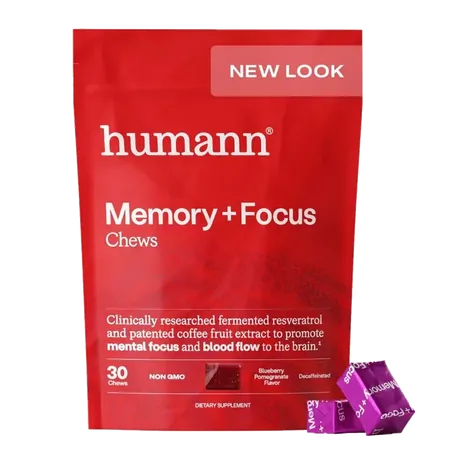
One soft blueberry-pomegranate chew a day of beet powder, a grape polyphenol and coffee fruit, made for a Texas company and sold by GNC.
SEE THE POUCH ON GNC'S PAGESold by GNC Holdings, LLC, Pittsburgh, Pennsylvania · made for HumanN, Austin, Texas · thirty soft chews, one a day · returnable within 30 days of the order date, used or unused, refund of the purchase price minus shipping
The price and any promotion on the day you look are set by the seller, and they change.
I have not printed a number here, because a number printed today can be wrong by the time you read it.
Before the First Chew
Two of the three lines on this panel are worth one short conversation before you start.
The beet line is there for its nitrate, which the body turns into a substance that widens blood vessels.
If you take anything daily for the heart and circulation, ask your pharmacist about a daily beet powder first.
Resveratrol can affect how some products that slow clotting do their job.
If you take anything daily that affects clotting, name resveratrol at the pharmacy counter.
Put the pouch in the same bag as everything else you take daily, and carry the whole bag to the counter.
It takes a few minutes, and it costs nothing.
The label says the chew is for adults only.
Keep it where a grandchild will not mistake it for a candy, because it looks like one.

How I Would Time a First Pouch
If you decide to try it, run it like a small experiment with a start, an end and something written down.
- Ask the pharmacist first, with the whole bag, if you take anything daily.
- Write the order date on the pouch the day it arrives, so you know when the return window closes.
- Take one chew at the same moment every day, whether that is with breakfast or on the morning walk.
- Leave your coffee exactly where it was, in amount and in timing.
- Change nothing else in the same thirty days, not your walking, your water or your bedtime.
- Write one plain line each evening about the day: names that came easily, names that did not, and how you slept.
- On about day twenty-five, read the lines back and decide, while there is still time to return it.
Notice what that plan can and cannot tell you.
It can tell you whether the habit suits you, whether the taste is pleasant, and whether the beet sits well.
It cannot tell you whether six months would match a study of 46 overweight adults at a higher dose.
Only six months could tell you that, and even then only about you.
If you keep going past the first pouch, keep the notebook going too.
A clock with no record is just time passing.

The First Pouch, Week by Week
It helps to know in advance what each week of a first pouch can and cannot show you.
Here is how I would expect the calendar to go, based only on what the panel and the studies say.
Week one is about the chew itself.
You learn whether you like the taste, whether the texture suits your teeth and whether the habit fits your morning.
It is also the week the beet may announce itself with a pink tinge, which is harmless and usually passes within a day.
If your stomach or anything else disagrees with the chew, this is the week you will find out.
Week two is about the habit.
By now you either reach for the pouch without thinking, or you keep forgetting it on the counter.
Both answers are useful.
A habit that will not stick for two weeks is unlikely to stick for twenty-six.
Week three is about the notebook.
You have fourteen or fifteen evening lines by now, and you can start reading them back without judging yet.
Look for plain patterns, like the days you slept badly or skipped the walk.
Those patterns will explain more of your good and bad days than any chew.
Week four is about the decision.
The return window closes thirty days after the order date, so this is the week to decide, not the week after.
By the end of the month you will know whether this is a habit you want.
You will not know whether it matches a twenty-six-week study, because you will have run less than a fifth of that study's clock.
A month answers the questions a month can answer, and it is fair to ask no more of it.
If you do decide to keep going, the next milestones are simple to mark.
Three pouches is about thirteen weeks, halfway to the study's clock, and six pouches and two chews reaches the full 182 days.
Who the Chew Suits, and Who It Does Not
It suits a man who wants a daily habit without water, without a weekly organizer and without measuring anything.
It suits someone who reads a panel and is glad to find every weight printed on it.
It suits someone who understands that the evidence is early and wants to try it on those terms anyway.
And it suits someone who will keep a record for a month instead of guessing.
It does not suit a man who is counting on a pouch to do the work of water, walking, less alcohol and better food.
Those clocks are longer, and nothing in a chew runs them.
It does not suit anyone who takes something daily for the heart and circulation or anything that affects clotting and has not asked about it first.
And it does not suit a man whose worry about memory is serious enough that it belongs in a clinician's office rather than a kitchen drawer.
The chew is a small daily choice, and it is at its best when it is handled like one.
Short answers about the three clocks
Do I need water with it?
No. You chew it and swallow it, which is the main reason people choose it.
How long before I would know anything?
A month tells you about the habit, the taste and the beet. The only memory study behind the chew ran twenty-six weeks. [3]
Which line has a study that matches its dose?
The coffee fruit, at 100 milligrams, the same as its two-hour study. [1]
Which line has the only memory result?
The resveratrol, from a twenty-six-week study at 200 milligrams a day in 46 overweight adults. The chew holds 150. [3]
Does it have caffeine?
The front of the pouch prints Decaffeinated, and the panel gives no milligram figure. Count your coffee as usual.
How much sugar is in a pouch?
Sixty grams of added sugar across thirty chews, about half a teaspoon a day.
When does the return window close?
Thirty days after the order date, not the delivery date. Used or unused, minus shipping.
Are the reviews purchase-confirmed?
No. They were first posted on the maker's site and fed through to the seller's page, so this page gives them no purchase mark.
Will the beet turn anything red?
It can turn urine pink or red for a day, harmlessly.
Every Clock on This Page, in One Place
- Coffee fruit, 100 mg: one dose, two hours, a protein in blood, ten people per group. [1]
- Beet, 300 mg of powder: one day of nitrate-rich eating with juice, a scan of blood flow, no memory test. [2]
- Resveratrol, 150 mg: the study used 200 mg a day for twenty-six weeks in 46 overweight adults, and found a word-list result. [3]
- The pouch: thirty chews, thirty days, one a day.
- The only memory study: 182 days, or six pouches and two chews.
- Resveratrol over that clock: about 27 grams from the chew against about 36 in the study, three quarters.
- Sugar: 2 grams a chew, 60 grams a pouch, 364 grams over twenty-six weeks.
- The return window: thirty days from the order date, which leaves about 24 to 29 chews.
- The longest clocks: three years of food, eight years of processed food, thirty years of drinking, and water every day.

What One Pouch Can Honestly Tell You
I walked back up from the bend this morning thinking about the three clocks.

Two hours is a lab clock.
It tells you something moved, once, in a few people.
One day is a scan clock.
It tells you blood went somewhere a little differently after a day of beets.
Twenty-six weeks is a life clock.
It is the only one of the three that asked anybody to remember anything, and it asked them over half a year.
A pouch is a month.
It cannot be any of those three clocks, and it does not pretend to be.
What a month can honestly tell you is whether this is a habit you want to keep.
Whether you like the taste, whether it fits your walk or your commute, and whether the beet agrees with you.
If it is, and you keep going, you will be running the long clock yourself.
Keep the notebook, and in six months you will know more about your own mornings than any widget can tell you.
If it is not, you have about four weeks from the order date to send it back, used or unused.
That is a fair arrangement, and it is more than many sellers offer.
Either way, the river will still be bending in the same place when the pouch is empty.
The men on the bench will still be keeping their own kinds of time, and so will you.
What I would ask of anyone who buys it is simply to keep an honest clock.
Write the order date on the pouch, keep one line a night, and let the calendar, not a feeling on a single morning, do the judging.
That is the whole method, and it costs nothing but a pencil.
It is also the only way a thirty-day pouch can tell you anything worth knowing.
One chew a day is a small clock, and small clocks are worth keeping honestly.
Every ingredient on the panel, what it is, where it comes from and what the research says about it, is written out in the ingredient guide linked at the foot of this page.
That guide also carries the cautions in full, the references and the disclosures this page is required to make.
Start the clock on a morning you will remember
One soft blueberry-pomegranate chew a day of beet powder, a grape polyphenol and coffee fruit, made for a Texas company and sold by GNC.
SEE THE POUCH ON GNC'S PAGEHumanN SuperBeets Memory + Focus, sold by GNC · thirty blueberry-pomegranate soft chews · 20 calories and 2 grams of added sugar each · thirty days from the order date to return it, used or unused
Sold and shipped by GNC Holdings, LLC, Pittsburgh. The price and any promotion are set by the seller.
P.S. If you keep only one number from this page, keep 182.
That is the number of days in the one study behind this chew that tested memory, and it is six pouches long. [3]
P.P.S. Write the order date on the pouch.
The window closes thirty days after you order, not thirty days after it arrives.